
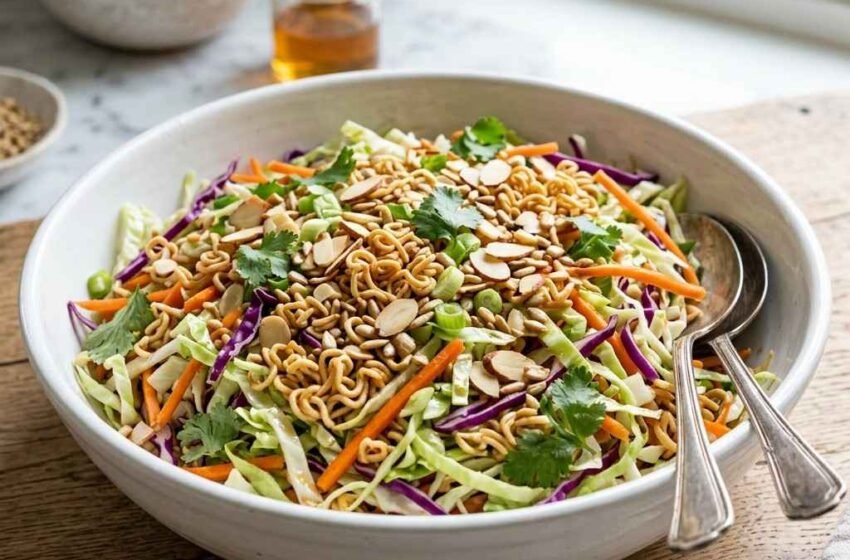
Crunchy Asian Ramen Noodle Salad is a colorful, refreshing side dish that combines crisp cabbage, sweet carrots, toasted ramen noodles, sliced almonds, and sunflower seeds with a flavorful homemade Asian-inspired dressing. Every bite offers a satisfying contrast of textures: crunchy vegetables, nutty toasted toppings, and a sweet-and-tangy dressing with savory soy sauce, aromatic sesame oil, garlic, and ginger.
This easy ramen noodle salad is perfect for summer cookouts, potlucks, family dinners, picnics, and casual gatherings. It comes together in about 20 minutes, uses convenient pantry ingredients, and requires very little cooking. Instead of boiling the noodles, you toast the dry ramen until lightly golden, giving the salad its signature crunch and adding a delicious roasted flavor.
The secret to making this salad especially good is timing. Tossing the vegetables with the dressing shortly before serving helps preserve their freshness, while adding the toasted noodles, almonds, and sunflower seeds at the last minute keeps them crisp. You can prepare the dressing and chop the vegetables in advance, making this a convenient option when you need a quick, crowd-pleasing side dish.
Why You’ll Love This Recipe
- Big crunch in every bite: Toasted ramen noodles, almonds, sunflower seeds, and fresh cabbage create several layers of texture.
- Quick preparation: The salad takes approximately 20 minutes from start to finish.
- Sweet and tangy dressing: Honey balances rice vinegar and soy sauce for a well-rounded flavor.
- Fresh and colorful: Green cabbage, red cabbage, carrots, green onions, and cilantro make the salad vibrant.
- Perfect for gatherings: It is easy to prepare in a large bowl and serve family-style.
- Simple pantry ingredients: Most of the dressing ingredients are common kitchen staples.
- Easy to customize: Add chicken, shrimp, edamame, or extra vegetables to make it more substantial.
- Great for meal prep: Prepare the components ahead and combine them just before serving.
- Flexible flavor: Adjust the sweetness, acidity, and heat to suit your preferences.
- A versatile side dish: Serve it with grilled chicken, fish, tofu, or your favorite barbecue dishes.
Equipment
- 12-inch dry skillet
- 4- to 5-quart mixing bowl
- 2-cup mixing bowl
- Whisk
- Cutting board
- Chef’s knife
- Measuring cups
- Measuring spoons
- Large serving bowl
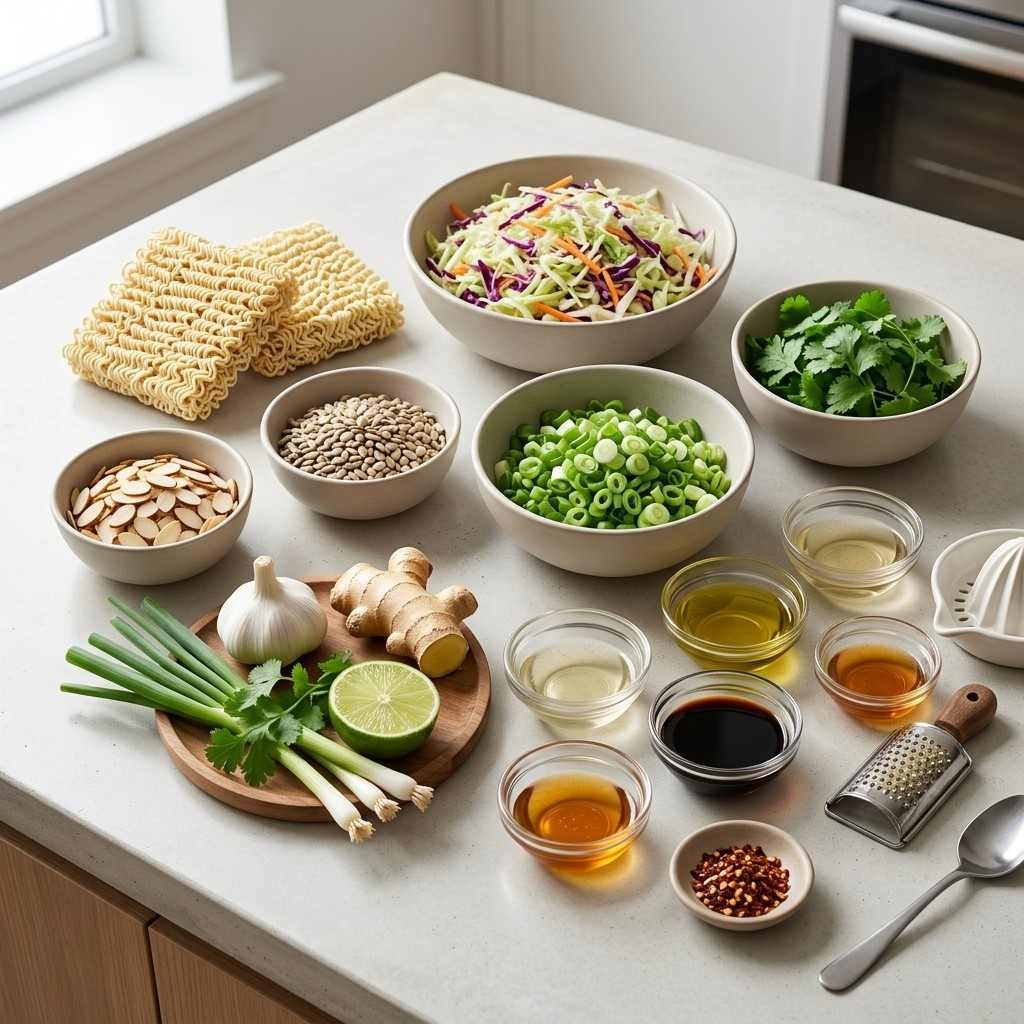
Ingredients
- 2 packages ramen noodles, 3 ounces each, seasoning packets discarded
- 4 cups coleslaw mix
- ½ cup sliced almonds
- ⅓ cup sunflower seeds
- 4 green onions
- ¼ cup fresh cilantro
- ¼ cup olive oil
- ¼ cup rice vinegar
- 3 tablespoons soy sauce
- 2 tablespoons honey
- 1 teaspoon sesame oil
- 1 garlic clove, finely minced
- ½ teaspoon freshly grated ginger
- 1 tablespoon fresh lime juice
- ¼ teaspoon crushed red pepper flakes
Ingredient Notes
- Ramen noodles: Instant ramen provides the signature crunch when toasted in a dry skillet. Discard the seasoning packets because the homemade dressing supplies the flavor. Break the noodles into small, bite-sized pieces before toasting.
- Coleslaw mix: A ready-made mixture of shredded green cabbage, red cabbage, and carrots makes preparation easier. The cabbage stays crisp and holds up well to the dressing.
- Sliced almonds: Almonds add a delicate nutty flavor and extra crunch. Toast them carefully because thin slices can brown quickly.
- Sunflower seeds: These contribute an earthy, nutty taste and another layer of texture. Unsalted sunflower seeds are ideal because the soy sauce already adds saltiness.
- Green onions: Green onions provide a fresh, mild onion flavor. Slice both the white and green portions thinly for even distribution.
- Fresh cilantro: Cilantro adds a bright herbal note that complements the tangy dressing. Fresh parsley can be substituted if you prefer a milder flavor.
- Olive oil: Olive oil forms the base of the dressing. Choose a mild variety so it does not overpower the sesame, ginger, and soy flavors.
- Rice vinegar: Rice vinegar contributes gentle acidity and balances the sweetness of the honey. Unseasoned rice vinegar is a good choice because it allows you to control the flavor.
- Soy sauce: Soy sauce adds savory depth and umami. Low-sodium soy sauce can help reduce the overall sodium content.
- Honey: Honey softens the sharpness of the vinegar and balances the salty soy sauce. Adjust the quantity slightly if you prefer a less sweet dressing.
- Sesame oil: A small amount provides a distinctive roasted, nutty aroma. Toasted sesame oil is especially flavorful, so a little goes a long way.
- Garlic: Freshly minced garlic gives the dressing a savory kick. Mince it finely so the flavor distributes evenly.
- Fresh ginger: Grated ginger contributes a gentle warmth and fresh aroma that complements the other dressing ingredients.
- Lime juice: Fresh lime juice brightens the dressing and adds another layer of citrus flavor.
- Crushed red pepper flakes: These provide mild heat. Reduce the amount or omit them entirely if you prefer a milder salad.
How to Make Crunchy Asian Ramen Noodle Salad
– Prepare the ramen noodles: Remove the seasoning packets from the ramen packages and discard them or save them for another use. Break the dry noodles into small, bite-sized pieces that will be easy to mix with the vegetables.
– Toast the ramen: Place a large, dry skillet over medium heat. Add the broken ramen noodles and toast for approximately 3–5 minutes, stirring frequently. Watch carefully as the noodles begin to turn golden and develop a nutty aroma. Transfer them to a plate and allow them to cool completely.
– Toast the almonds and sunflower seeds: Add the sliced almonds and sunflower seeds to the same dry skillet. Toast for 2–3 minutes, stirring continuously, until lightly golden and fragrant. Transfer them to a separate plate to cool. If your skillet is small, toast the almonds and seeds in separate batches.
– Prepare the vegetables: Place the coleslaw mix in a large mixing bowl. Thinly slice the green onions and chop the fresh cilantro. Add both to the bowl and toss gently to distribute the ingredients.
– Make the dressing: In a small bowl, combine the olive oil, rice vinegar, soy sauce, honey, sesame oil, minced garlic, grated ginger, lime juice, and crushed red pepper flakes.
– Whisk until combined: Whisk the dressing thoroughly until the honey dissolves and the ingredients are evenly blended. Taste a small amount and adjust the balance if necessary. Add a little more honey for sweetness, rice vinegar for tanginess, or lime juice for extra brightness.
– Dress the vegetables: Pour the dressing over the coleslaw mixture a little at a time. Toss gently with salad servers or two large spoons until the cabbage and carrots are lightly coated. You may not need every drop of dressing, depending on your preference.
– Add the toasted toppings: Just before serving, add the cooled ramen noodles, sliced almonds, and sunflower seeds. Toss lightly to distribute the crunchy ingredients throughout the salad without crushing them.
– Finish and garnish: Sprinkle a little extra cilantro and sliced green onion over the top if desired. Reserve a small handful of toasted almonds and noodles to scatter over the salad for an attractive presentation.
– Serve immediately: Transfer the salad to a large serving bowl and enjoy while the ramen and nuts are still crunchy. If you prefer a chilled salad, refrigerate the dressed vegetables briefly before adding the toasted toppings.
Recipe Information
- Prep Time: 15 minutes
- Cook Time: 5 minutes
- Total Time: Approximately 20 minutes
- Servings: 6
- Course: Salad or side dish
- Cuisine: Asian-inspired
- Cooking Method: Skillet toasting and mixing
Flavor Profile Breakdown
- Savory: Soy sauce and garlic provide a deep, satisfying flavor.
- Sweet: Honey balances the acidity and saltiness of the dressing.
- Tangy: Rice vinegar and lime juice bring freshness to every bite.
- Nutty: Toasted almonds, sunflower seeds, and sesame oil create a rich, roasted aroma.
- Fresh: Cabbage, carrots, green onions, and cilantro keep the salad bright.
- Spicy: Red pepper flakes add a gentle warmth.
- Crunchy: Toasted ramen noodles and seeds contrast with the crisp vegetables.
Pro Tips for the Best Results
- Break the ramen into small pieces before toasting so the crunchy noodles are easier to eat.
- Keep the skillet at medium heat and stir constantly to prevent the noodles from burning.
- Allow all toasted ingredients to cool completely before adding them to the salad.
- Toast the almonds and sunflower seeds separately if you want better control over their browning.
- Use fresh coleslaw mix for the best crunch and color.
- Whisk the dressing well so the honey and seasonings are distributed evenly.
- Taste the dressing before using it and adjust the sweet, salty, and tangy flavors.
- Add the dressing gradually to avoid making the salad too wet.
- Keep the toasted noodles and nuts separate until shortly before serving.
- Use low-sodium soy sauce if you want more control over the saltiness.
- Chop the cilantro shortly before assembling the salad to preserve its fresh aroma.
- Reserve some toasted toppings for the final garnish.
- If preparing the salad ahead of time, store the vegetables, dressing, and crunchy ingredients separately.
- For a larger gathering, double the ingredients and toss the salad in batches to make sure everything is evenly coated.
Variations and Substitutions
- Chicken ramen salad: Add cooked, shredded chicken or sliced grilled chicken to make the salad more filling.
- Shrimp salad: Add cooked, chilled shrimp for a seafood variation that pairs well with the sesame dressing.
- Vegetarian protein: Mix in shelled edamame or cubed baked tofu for additional protein.
- Nut-free version: Omit the almonds and increase the sunflower seeds, provided sunflower seeds are suitable for your dietary needs.
- Cashew variation: Replace the almonds with toasted cashews for a slightly sweeter, buttery flavor.
- Extra vegetables: Add thinly sliced red bell pepper, cucumber, or shredded purple cabbage.
- Mandarin orange salad: Add drained mandarin orange segments for a juicy, sweet contrast to the tangy dressing.
- Spicy ramen salad: Add a small amount of sriracha or chili crisp to the dressing for more noticeable heat.
- Gluten-free version: Use certified gluten-free noodles and replace regular soy sauce with gluten-free tamari. Check all other ingredient labels as well.
- Maple dressing: Replace the honey with maple syrup for a different sweet flavor.
- Extra sesame flavor: Add toasted sesame seeds and a few extra drops of sesame oil.
- Brussels sprout variation: Replace part of the coleslaw mix with finely shredded Brussels sprouts for a heartier texture.
- Crispy topping: Add crispy wonton strips just before serving for another layer of crunch.
Common Mistakes to Avoid
- Burning the ramen: Dry noodles brown quickly. Stir continuously and remove them as soon as they become lightly golden.
- Adding warm toppings: Warm noodles and nuts can soften the vegetables and affect the texture. Let everything cool before mixing.
- Dressing the salad too early: The noodles absorb moisture and gradually lose their crispness. Toss everything together close to serving time.
- Using too much dressing: Excess dressing can make the cabbage soggy. Start with part of the mixture and add more as needed.
- Skipping the dressing taste test: Soy sauce, honey, and vinegar vary by brand. Taste and adjust the balance before adding it to the salad.
- Overcrowding the skillet: Too many noodles at once can toast unevenly. Work in batches if necessary.
- Using salted seeds without adjusting: Salted sunflower seeds can make the finished salad too salty, especially when combined with regular soy sauce.
- Chopping the vegetables too thickly: Large cabbage pieces are harder to eat alongside the small crunchy toppings. Aim for thin, even shreds.
- Adding too much sesame oil: Its flavor is concentrated, and excessive amounts can overpower the dressing.
- Expecting dressed leftovers to stay crunchy: The vegetables remain enjoyable, but the noodles soften as they absorb the dressing.
Serving Suggestions
- Serve alongside grilled chicken, steak, or roasted fish.
- Pair with grilled shrimp skewers for a fresh summer meal.
- Add baked tofu or edamame for a more substantial vegetarian option.
- Serve with barbecue dishes at picnics and cookouts.
- Include it on a potluck table with grilled vegetables and rice dishes.
- Pair it with Asian-inspired lettuce wraps or dumplings.
- Serve in individual bowls for a light lunch.
- Garnish with extra cilantro, sliced green onions, and toasted almonds just before bringing it to the table.
Storage and Make-Ahead Tips
- Store leftover dressed salad in an airtight container in the refrigerator.
- For the best quality, enjoy dressed leftovers within 1–2 days, understanding that the ramen noodles will soften.
- If you want to prepare the salad ahead, refrigerate the chopped vegetables separately from the dressing.
- Keep the toasted ramen, almonds, and sunflower seeds in an airtight container at room temperature once completely cooled.
- Add the dressing and crunchy toppings shortly before serving.
- Avoid storing toasted noodles while they are still warm, as trapped steam can make them soft.
- If you add chicken, shrimp, or another perishable protein, refrigerate the salad promptly and follow safe storage guidance for that ingredient.
- Do not leave the prepared salad at room temperature for more than 2 hours, or more than 1 hour in temperatures above 90°F (32°C).
- Freezing is not recommended because the fresh vegetables lose their texture and the noodles become soggy after thawing.
Nutrition Information (Approximate)
Estimated nutrition per serving, assuming the recipe serves six:
- Calories: 300–350
- Protein: 6–8 g
- Total Carbohydrates: 25–32 g
- Fat: 20–25 g
- Fiber: 3–5 g
- Sugar: 6–9 g
- Sodium: 450–750 mg
These figures are estimates and depend on the ramen brand, soy sauce, amount of dressing used, and exact serving size. For more accurate nutrition information, calculate the recipe using the labels of your specific ingredients.
Final Thoughts
Crunchy Asian Ramen Noodle Salad is an easy, colorful side dish that brings together crisp vegetables, toasted noodles, nutty seeds, and a homemade sweet-and-tangy dressing. Its combination of textures makes it a welcome addition to potlucks, cookouts, family dinners, and summer gatherings.
The most important trick is to keep the crunchy ingredients separate until just before serving. Toasting the noodles carefully, balancing the dressing, and using fresh coleslaw mix help create a salad that tastes bright and satisfying without requiring much preparation.
You can keep the recipe simple or customize it with chicken, shrimp, edamame, or extra vegetables. Prepare the components ahead of time, toss everything together when you are ready to eat, and enjoy the contrast of crunchy noodles, fresh cabbage, and flavorful sesame dressing.
FAQs
Do I cook the ramen noodles before adding them to the salad?
No. For this version, the dry ramen noodles are broken into pieces and toasted in a skillet until lightly golden. They are not boiled. Toasting gives the salad its characteristic crunch.
Can I make Crunchy Asian Ramen Noodle Salad ahead of time?
Yes. Prepare the vegetables and dressing in advance, and toast the noodles, almonds, and sunflower seeds separately. Store the components separately and combine them shortly before serving to preserve the crunch.
Why did my ramen noodles become soggy?
The noodles absorb moisture from the dressing over time. To keep them crisp, let them cool completely after toasting and add them to the salad just before serving.
Can I use a different type of noodle?
Yes. Crispy chow mein noodles or another crunchy salad topping can work as substitutes. If using a different noodle, follow its package instructions and make sure it is suitable for eating in the way you plan to serve it.
Can I make this salad without almonds?
Absolutely. Replace the almonds with additional sunflower seeds, pumpkin seeds, or chopped cashews if appropriate. For a nut-free salad, check that all packaged ingredients are free from unwanted nut cross-contact.
Is this ramen noodle salad vegetarian?
Yes, it can be vegetarian if the ramen noodles and soy sauce you use contain no animal-derived ingredients. Check the labels because some ramen varieties contain animal-based flavorings even when the seasoning packet is discarded.
How can I make the salad gluten-free?
Use certified gluten-free noodles and gluten-free tamari instead of regular soy sauce. Check the labels of the vinegar, sweetener, and all other packaged ingredients to confirm they meet your dietary requirements.
Can I add chicken to this salad?
Yes. Cooked, chilled, shredded chicken or sliced grilled chicken makes it more filling. Add the chicken just before serving and keep the salad refrigerated until needed.
What can I use instead of honey?
Maple syrup or granulated sugar can be used, depending on your preference. Start with the same general amount, then taste the dressing and adjust to balance the vinegar and soy sauce.
How long does the salad last in the refrigerator?
For the best texture, eat the salad soon after dressing it. Leftovers can generally be kept refrigerated in an airtight container for 1–2 days, but the ramen will soften. Undressed components keep better when stored separately.
Can I make the dressing less salty?
Use low-sodium soy sauce and avoid salted sunflower seeds. You can also increase the lime juice slightly to brighten the dressing without adding more salt.
Can I make the salad spicier?
Yes. Add extra crushed red pepper flakes or a little sriracha to the dressing. Add small amounts at a time and taste until you reach your preferred heat level.
What should I serve with ramen noodle salad?
It pairs well with grilled chicken, shrimp, tofu, fish, barbecue dishes, and Asian-inspired wraps. You can also add edamame or another protein to serve it as a more substantial meal.